
OERC's Game-Changing Amendment: Hybrid Inverters Now Allowed for PM Surya Ghar in Odisha
The Odisha Electricity Regulatory Commission (OERC) issued an amendment on November 27, 2025, explicitly permitting hybrid inverters in net metering setups for rooftop solar PV projects, including under the PM Surya Ghar Muft Bijli Yojana. This shift aligns Odisha's regulations with the Ministry of New and Renewable Energy's (MNRE) office memoranda from September 20, 2024, and July 21, 2025, which endorse hybrid inverters and mandate SIM-based data loggers for real-time monitoring. Previously limited to grid-tied inverters, the order now defines hybrid inverters as bi-directional devices integrating solar PV, batteries, loads, and the grid for seamless energy management.
Syed Azad Ali
11/27/20252 min read
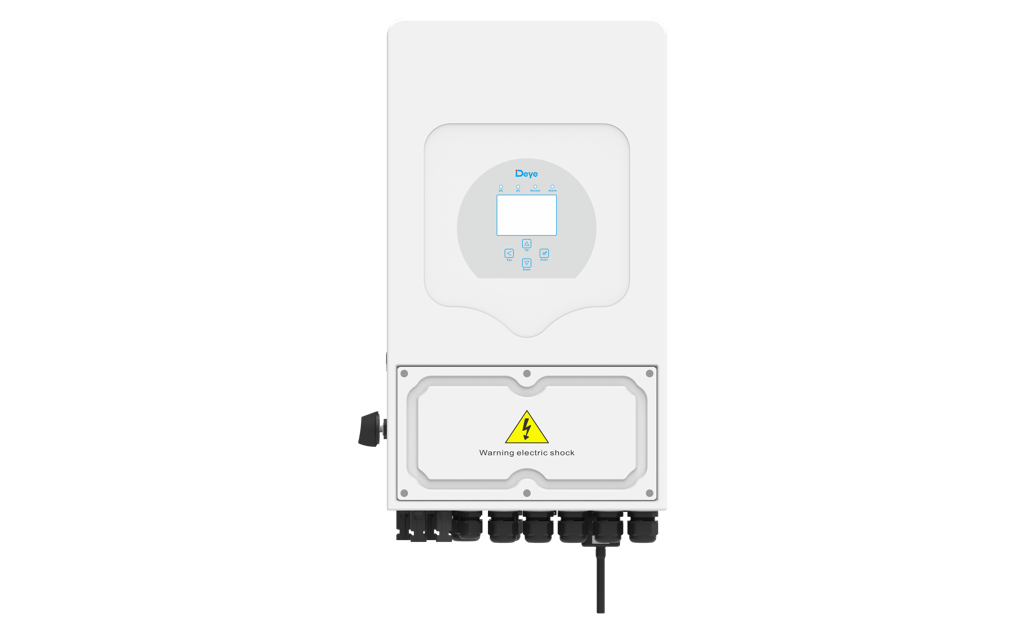
The Odisha Electricity Regulatory Commission (OERC) amended its 2016 Net Metering Order on November 27, 2025, to allow hybrid inverters alongside grid-tied ones for rooftop solar PV projects, including PM Surya Ghar Muft Bijli Yojana. This aligns with MNRE guidelines from September 2024 and July 2025, permitting hybrid inverters and SIM-based M2M data loggers for real-time monitoring while harmonizing with central schemes. Hybrid inverters, defined as bi-directional devices managing solar PV, batteries, loads, and the grid, enable both grid-interactive and standalone modes for reliable energy use.
Tackling Tariff Dynamics and Peak Demand Pressures
Odisha's time-of-day (ToD) tariffs have driven daytime rates to as low as 0.1 rupees per unit during solar peaks, creating surplus supply when household demand dips. Nighttime demand surges, however, strain discoms—TPCODL eyes 2,300 MW summer peaks, TPSODL 820 MW—amid rising consumption and thermal generation limits. By promoting storage via hybrids, OERC curbs grid overloads, defers infrastructure costs, and incentivizes prosumers to shift usage, reducing reliance on expensive peak power at 20% higher rates.
How Hybrid Inverters Enable Household Energy Storage
Hybrid inverters integrate solar DC-to-AC conversion with battery charge/discharge management, acting as the system's intelligent hub. During peak solar hours, they prioritize household loads, then convert excess AC back to DC to charge batteries (e.g., lithium-ion packs), storing surplus for later. At night or low-sun periods, batteries discharge DC power, which the inverter converts to AC for seamless appliance use, prioritizing self-consumption over grid draw while syncing voltage/frequency for stability.
Key mechanisms include:
Real-time Power Flow Optimization: Monitors solar output, battery state-of-charge, and loads to direct excess daytime energy (at 0.1 ₹/kWh) to storage, discharging during high-tariff nights for arbitrage savings.
Grid Independence Features: Anti-islanding protection disconnects during outages; supports off-grid mode for backup, ideal for Odisha's rural areas.
Scalable Integration: Pairs with PM Surya Ghar subsidies (up to ₹78,000 for 3kW systems), handling 500kW+ setups with MNRE-compliant standards like IEEE 519 harmonics.
Hybrid Inverter Operating Modes:
Hybrid inverters operate in multiple modes to optimize energy flow, as outlined in OERC's Annexure-II diagram for PM Surya Ghar systems. These modes switch automatically based on solar input, battery status, grid availability, and load demand, ensuring efficiency and reliability.
Grid-Tied Mode: Solar power feeds household loads first; excess exports to grid via net metering (credited at 0.1 ₹/kWh daytime). Batteries remain idle unless programmed for charging from grid off-peak.
Battery Charging Mode: Excess solar (post-loads) converts to DC for battery storage; prioritizes self-use during low daytime tariffs to arbitrage against night peaks.
Backup/Off-Grid Mode: Grid failure triggers inverter to disconnect (anti-islanding per IS 16169), powering loads solely from solar/batteries for uninterrupted supply.
Blended/Grid Support Mode: Combines sources—solar for daytime, battery/grid for evenings—while exporting surplus; M2M loggers transmit data for OERC compliance.
Simplified Line Diagram (OERC Annexure-II): Solar PV panels → Hybrid Inverter (MPPT charge controller + bi-directional converter) → Split outputs: AC to household loads/grid tie-point + DC to/from battery bank. Grid connects via bi-directional meter for import/export tracking. Grid-Tied Reference (Annexure-I): Solar PV → Grid-Tied Inverter → Direct AC to loads/grid (no battery).
Broader Impacts for Prosumers and Odisha's Energy Shift
Prosumers gain autonomy, slashing bills by 30-50% through stored solar offsetting peaks, with faster approvals under scheme overrides. For Sustyield Solar, this boosts hybrid offerings from Deye/Solinteg, targeting Odisha's rooftop boom toward India's 40GW goal. Grid-wide, it eases nighttime strain, enables virtual power plants via M2M loggers, and accelerates adoption amid tariffs of ₹2.90-₹6.10/unit. This positions Odisha as a storage pioneer, blending policy with tech for sustainable demand management.